
November 30, 1874 – January 24, 1965
Winston Churchill stands as one of history’s most formidable leaders, whose iron will and eloquence helped guide Britain through its darkest hours. Born into privilege as part of the aristocratic family of the Dukes of Marlborough, he transformed himself from a military officer and war correspondent into one of the 20th century’s most consequential statesmen.
As Prime Minister during World War II, Churchill’s leadership was defined by his refusal to surrender to Nazi Germany when Britain stood virtually alone. His speeches during this period became legendary, with phrases like “We shall fight on the beaches” and “This was their finest hour” rallying not just Britain but inspiring resistance to tyranny worldwide. His partnership with Franklin D. Roosevelt and his forced alliance with Stalin proved crucial in defeating Hitler’s Germany.
Beyond his wartime leadership, Churchill was a renaissance man who excelled in multiple fields. He won the Nobel Prize in Literature for his historical writings, including his six-volume memoir of World War II. He was also an accomplished painter, producing hundreds of canvases throughout his life. His wit was legendary, and his quotations remain widely cited today.
Churchill’s legacy is complex and continues to be debated. While celebrated for his wartime leadership, his views on empire, race, and certain military decisions like the bombing of Dresden have faced increasing scrutiny. Yet his fundamental role in preserving democracy during its greatest crisis cannot be denied.
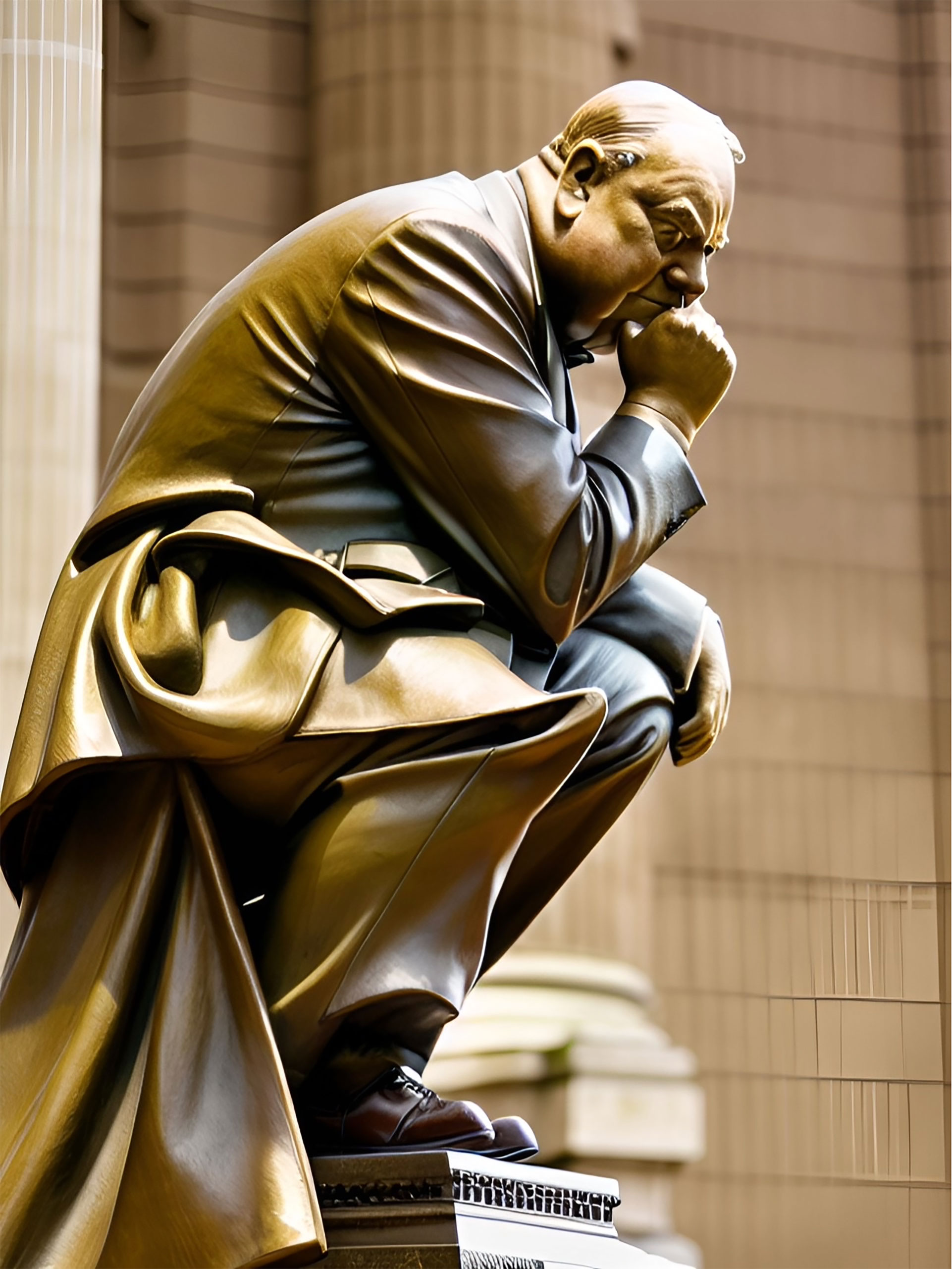
Winston Churchill’s Statue
Cast in gleaming bronze, the figure shows Churchill deep in thought. The detailed sculpting of his suit creates dramatic folds that add movement and depth to the piece, while his slightly hunched posture suggests both the weight of responsibility and his famous bulldog determination. The statue’s placement against classical architecture creates a sense of historical gravitas, fitting for a man who had a deep appreciation for the past, and who shaped much of our past, through both action and thought.
More Thinkers to Explore
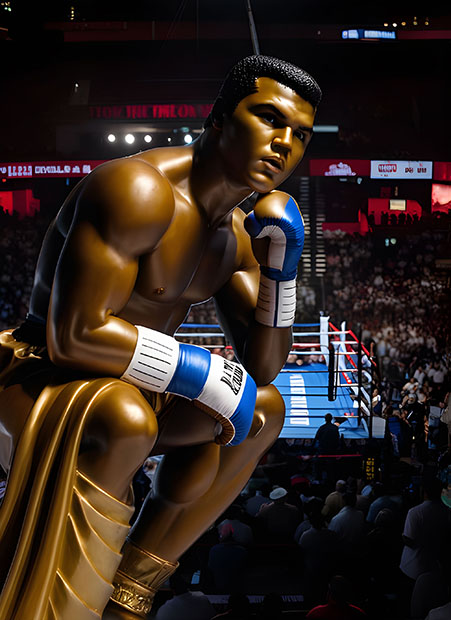
Muhammad Ali
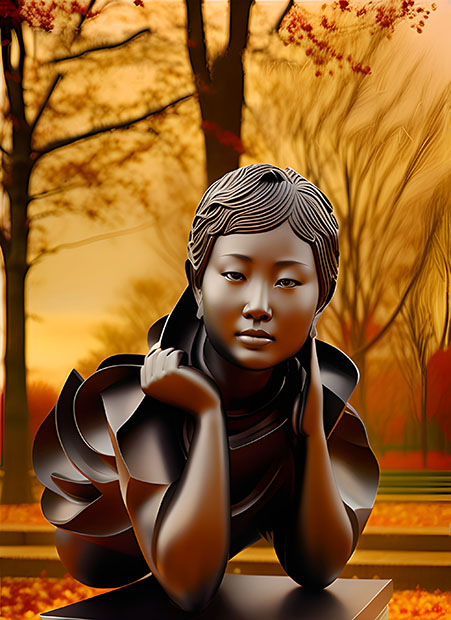
Maya Lin
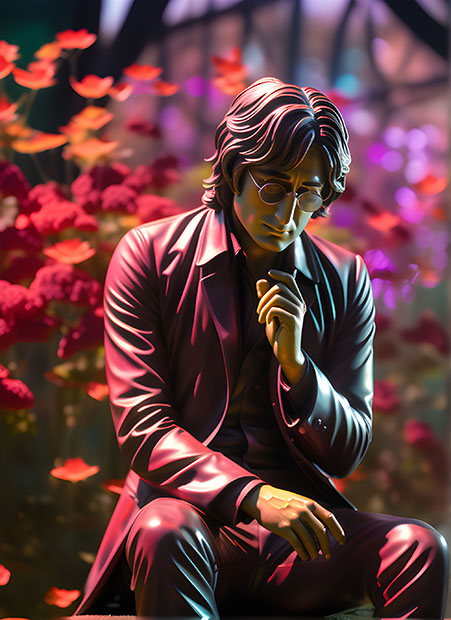
John Lennon